Apologist and Martyr.
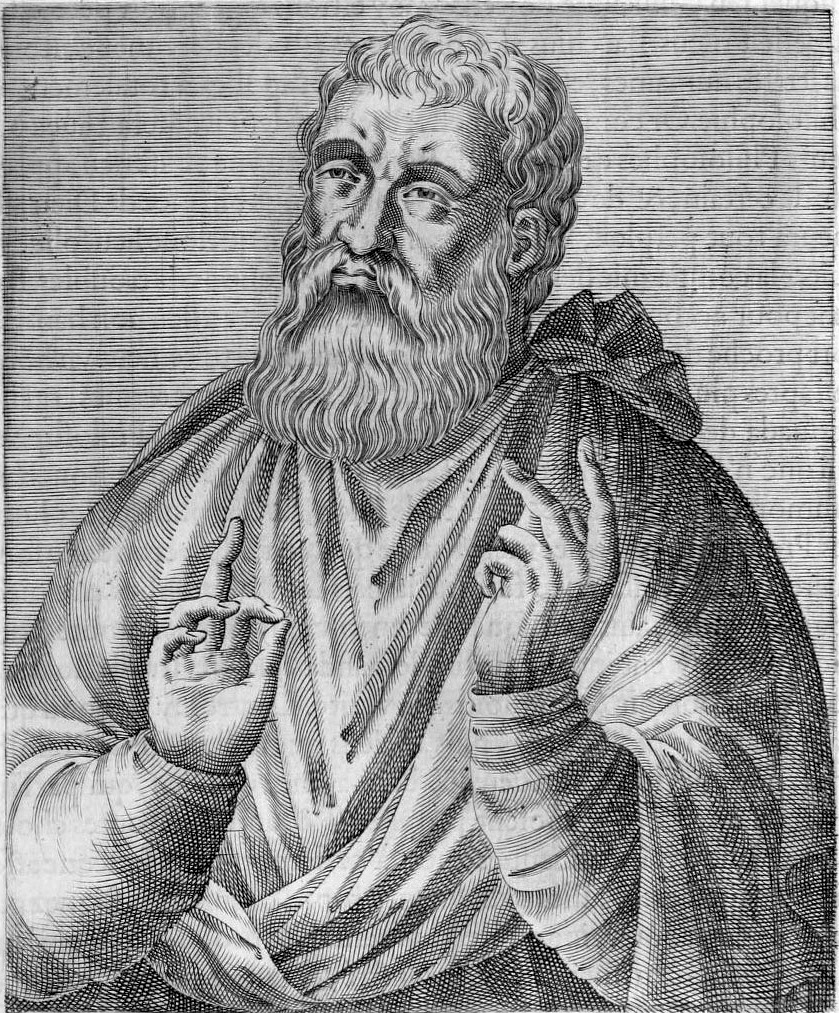
“For I myself, too, when I was delighting in the doctrines of Plato, and heard the Christians slandered, and saw them fearless of death … perceived that it was impossible that they could be living in wickedness and pleasure” (2Apol.12)
Significance
• One of the first highly educated Gentiles to use his learning to defend Christianity even before the emperor himself.
• Opposed rival teacher Marcion who taught that the New Testament contradicted the Old Testament.
• Logos-theology: Even before the coming of Christ, the logos was manifested partially in such Greek philosophers as Socrates and Heraclitus, and in such Hebrews as Abraham, Ananias, Azarias, Misael, and Elijah (1st Apology). Plato’s truth was dependent on Moses (chs.59-60).
• Fullest Accounts of Christian Rituals including baptism and Eucharist (1st Apology 61-67)
• On the basis of Isaiah 53:2 declared that Jesus was not of a comely appearance. (Dialogue with Trypho the Jew)
• Used the concept of typology in finding Christ prefigured in many other OT passages. (e.g. Noah’s ark – wood of the cross; Leah – synagogue; Rachel – church; Joshua – Jesus…) (Dialogue with Trypho the Jew)
According to an accurate account complies in the 3rd century, Justin was brought to trial with six other believers c.165. He answered his interrogator simply and went courageously to his death.
REFERENCES
John D. Woodbridge (ed), Great Leaders of the Christian Church (Chicago: Moody Press, 1988)
“For I myself, too, when I was delighting in the doctrines of Plato, and heard the Christians slandered, and saw them fearless of death … perceived that it was impossible that they could be living in wickedness and pleasure” (2Apol.12)
Significance
• One of the first highly educated Gentiles to use his learning to defend Christianity even before the emperor himself.
o His writings use citations from Euripides, Xenophon, and above all Plato to strengthen his case for Christianity.
• Opposed rival teacher Marcion who taught that the New Testament contradicted the Old Testament.
• Logos-theology: Even before the coming of Christ, the logos was manifested partially in such Greek philosophers as Socrates and Heraclitus, and in such Hebrews as Abraham, Ananias, Azarias, Misael, and Elijah (1st Apology). Plato’s truth was dependent on Moses (chs.59-60).
o The seed of God’s logos (logos spermatikos) was disseminated to all men in their God-given capacity to respond to truth. “Whatever things were rightly said among all men are the property of us Christians” (2Apol. 13:4)
o There were Christians before Christ, such as Socrates and Heraclitus (1Apol. 46:3)
o All Theophanies in OT were Christophanies “For the ineffable Father and Lord of all neither comes to any place… but remains in His own place…” (Dial.127:2)
o There were Christians before Christ, such as Socrates and Heraclitus (1Apol. 46:3)
o All Theophanies in OT were Christophanies “For the ineffable Father and Lord of all neither comes to any place… but remains in His own place…” (Dial.127:2)
• Fullest Accounts of Christian Rituals including baptism and Eucharist (1st Apology 61-67)
• On the basis of Isaiah 53:2 declared that Jesus was not of a comely appearance. (Dialogue with Trypho the Jew)
• Used the concept of typology in finding Christ prefigured in many other OT passages. (e.g. Noah’s ark – wood of the cross; Leah – synagogue; Rachel – church; Joshua – Jesus…) (Dialogue with Trypho the Jew)
According to an accurate account complies in the 3rd century, Justin was brought to trial with six other believers c.165. He answered his interrogator simply and went courageously to his death.
REFERENCES
John D. Woodbridge (ed), Great Leaders of the Christian Church (Chicago: Moody Press, 1988)
Comments
Post a Comment