The Moral Basis of Indian Law

Now, while the debate exists in the philosophy of law about the relationship between political laws and the moral law, attempts to base the laws on anything other than the moral law sooner face problems of justifiability. While it may be the case that reductionism of politics to ethics is not totally feasible, resort to anti reductionism is only self-defeating. And, then authority arguments that try to derive validity of laws from higher laws, which in return try to derive their validity from a much higher one (e.g. Hans Kelsen's Pure Theory of Law), will have to strike ceiling at some point ( See Marmor, A. Philosophy of Law, Princeton, 2011). For instance, the judges under Hitler's regime could not be absolved upon the relativist presumption that they were only conforming to some law of a sovereign nation. The question of validity and justice could not be anchored in such "sovereign" authority alone.

However, this doesn't mean that authority doesn't count. In fact, authority does often prescribe laws in many cases, but the laws are only instrumental towards a much larger cause. Thus, we have law-givers such as Solon, Moses, and Manu. However, the validity of the prescriptions are based on a deeper intent. The intent or the spirit of the law is what matters. It also means that where laws fail to serve the intent, they must fade away and give place to the new.

Plato's elaborative study of justice as an ethical virtue in the analogically larger Republic is based on the same understanding that ethics and politics are inseparable. Similarly, his disciple Aristotle didn't see any reason to separate the both. In the Biblical tradition, the entire Mosaic Law was based on the Decalogue or the Ten Commandments, which were the essence of the Law. Jesus pointed out that they all hung on the two Great Commandments: To love God absolutely and to love one's neighbor as oneself. Of course, Paul, later submitted that the Law was only a revealer and a restricter. It revealed human sinfulness and it was meant to restrict the lawless (it was given for the lawless). Jesus pointed out that certain laws (for instance, the law of divorce) were only permissive because of the hardness of human hearts, but didn't reflect the original intent of human creation.

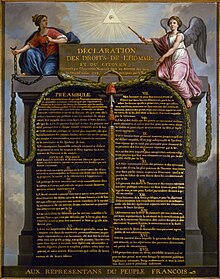
Looking, now, into the Indian Constitution, one asks what is Indian Law based upon ultimately. The Preamble makes the democratic nature of the Republic clear. And, so it is the people's government for sure. But, the moral philosophy is indicated in words like "humanism" and "scientific temper", featured later on under Fundamental Duties. While the temper is scientific, the philosophical ground is humanism and its philosophy of man is condensed in the section called Fundamental Rights. The Law exists to ensure the protection of these fundamental rights of every Indian citizen. Consequently, any law that is inconsistent with these rights is automatically annulled.

The Fundamental Rights are not prescriptions to the people but declarations of humanism. These declarations are prescriptive only to the laws, since the laws are expected to conform to them. Thus, they not only inform but also serve as reference points, as absolute foundation, for the laws. As such, we may refer to them, with regard to humanism, as the intent, or spirit of the laws; perhaps even as the Law of the laws since they serve as the measure of all laws.

But, how do we know that these declarations are true? Perhaps, it is similar to asking about the laws of logic, "How does one know whether they are true?" The answer is: by using them or trying not to use them. One cannot deny them, but then one cannot deny anything without using them. Similarly, one cannot deny the Fundamental Rights without himself losing the rights.

Comments

Popular posts from this blog

What is Theology? Its Divisions with Short Descriptions

Published in REVIVE, May 2012 (Malayalam Edition) A simple and literal definition of “theology” would be “the science of divine things”. It comes from two Greek words theos meaning “God” and logia meaning “discourse or speech”. In modern times, it is the stream of knowledge that differentiates the secular pursuit of knowledge from the sacred one because of its starting point: all secular studies begin with reason and experience while theology begins with faith. The starting point for all extra-theological studies is the world (Latin: saeculum); the starting point for theology is the Word of God. So, while one may say that theology is the study of God, the factual definition would be that theology is the science that rationally pursues the understanding of the self-revelation of God in the Scriptures. It would be interesting to note that many of the universities had originally begun as seminaries and theology was once known as the Queen of Sciences. However, with the dawn of theAge of E...

Placebo and the Philosophy of Mind and Matter in Drug Research

A placebo is a non-therapeutic substance administered under the camouflage of medication to deceive patients into believing that they are receiving medications; this done solely for psychological and not for physiological effects. Placebo may usually be used to compare its effects with the effects of other drugs in drug research. Let's take the case of an experiment that tries to establish whether a particular drug, say to treat weariness, is genuine or merely has the effects of a placebo. Suppose 20 candidates are chosen for this experiment. 10 are given the drug and the rest are put on a placebo while they are told that the placebo is a genuine medication. They need to make sure that the deception is well carried on for the success of the experiment. If both the groups make similar improvements after taking the treatments, the new drug seems to only function as a placebo in effect. The basic hypothesis of the placebo raises the question of mind over matter. Of course, this pushes...

Reliability, Predictability, and Paul the Octopus

Paul the Octopus has recently become very famous after his predictions for Germany and Spain during the World Cup 2010 came right. The 100% accuracy tag distinguishes him from any other diviner who had attempted a prediction during the World Cup. There were responses and reactions from various people including sportsmen, statesmen, and mathematicians. Whatever, the use of Paul has demonstrated once again that mankind's search for an extra-temporal, psychic foresight has not quelled through the historical calendar returning a decade over this millennium. The question before us is can such predictions as those of Paul be counted on as reliable (in other words, can they be seriously taken as true)? The mathematicians have plumped for chance. It's all a matter of probability, they say ( BBC News ). However, the argument of chance in itself is weak. The mathematics of chance will calculate that the probability of Paul being right seven times out of seven is 1/128. But, the conclusi...