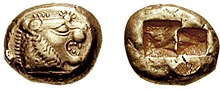
Acts 3:6 Christ didn't leave with us silver and gold


"Silver and gold have I none..." (Acts 3:6)

How often the things that we seek after are not what Christ left for us when He ascended to heaven! How attractive is a religion that promises silver, gold, good job, land, house, prosperity, and all worldly things! Jesus didn't leave any of such things for His disciples. But, these are what the modern Judas Iscariots are trying to sell Jesus off for; for filthy lucre that is good for none. And, no wonder only Judas got some silver out of Jesus, by betraying Him with a kiss. He had to sell Him. In history past, the Church sold relics and indulgences promising people a place in heaven; in the present scenario, they invite people to "sow seed" of money to reap more money; testimonies are used as ideal adverts that take off the eyes from the real Jesus of the manger onto some other Jesus who makes people forget that they are pilgrims and travelers in this rapidly degenerating world. But, what does Jesus want us to pursue? The very things He left for us: the Father's Name (Jn.17:6), the Father's Word (17:14), His Authority and Power of the Holy Spirit (Lk.10:19; Acts 1:8). Are we pursuing the true spiritual riches of Christ? Or are we following a false Christ, even the anti-Christ?

Comments

Popular posts from this blog

Placebo and the Philosophy of Mind and Matter in Drug Research

A placebo is a non-therapeutic substance administered under the camouflage of medication to deceive patients into believing that they are receiving medications; this done solely for psychological and not for physiological effects. Placebo may usually be used to compare its effects with the effects of other drugs in drug research. Let's take the case of an experiment that tries to establish whether a particular drug, say to treat weariness, is genuine or merely has the effects of a placebo. Suppose 20 candidates are chosen for this experiment. 10 are given the drug and the rest are put on a placebo while they are told that the placebo is a genuine medication. They need to make sure that the deception is well carried on for the success of the experiment. If both the groups make similar improvements after taking the treatments, the new drug seems to only function as a placebo in effect. The basic hypothesis of the placebo raises the question of mind over matter. Of course, this pushes...

Is Water Baptism Necessary Before Partaking in Lord's Supper

"Last Supper" by Giovanni Domenico Tiepolo (1750) Yes, it is. Water baptism identifies one with the redemption work of Jesus Christ, with His death, burial, and resurrection. It is anticipated of visible identification with Christ and His Church. Every person has the personal responsibility to examine him/herself before deciding to partake in the Lord's Table. The Bible makes it clear that those who chose not to be baptized were rejecting the counsel of God (Lk.7:30). In a mixed congregation, it is not possible to always know who is worthy to partake of the Table; however, the minister must encourage only those who have been baptized for remission of sins (not just as a ritual but by faith in Jesus Christ) to partake of the Table. Before Jesus sat down to dip bread in the cup, He washed His disciples' feet. He makes the statement that they are already "washed" and only need feet to be washed. Of course, this may not explicitly/only refer to their baptism, fo...

Reliability, Predictability, and Paul the Octopus

Paul the Octopus has recently become very famous after his predictions for Germany and Spain during the World Cup 2010 came right. The 100% accuracy tag distinguishes him from any other diviner who had attempted a prediction during the World Cup. There were responses and reactions from various people including sportsmen, statesmen, and mathematicians. Whatever, the use of Paul has demonstrated once again that mankind's search for an extra-temporal, psychic foresight has not quelled through the historical calendar returning a decade over this millennium. The question before us is can such predictions as those of Paul be counted on as reliable (in other words, can they be seriously taken as true)? The mathematicians have plumped for chance. It's all a matter of probability, they say ( BBC News ). However, the argument of chance in itself is weak. The mathematics of chance will calculate that the probability of Paul being right seven times out of seven is 1/128. But, the conclusi...